









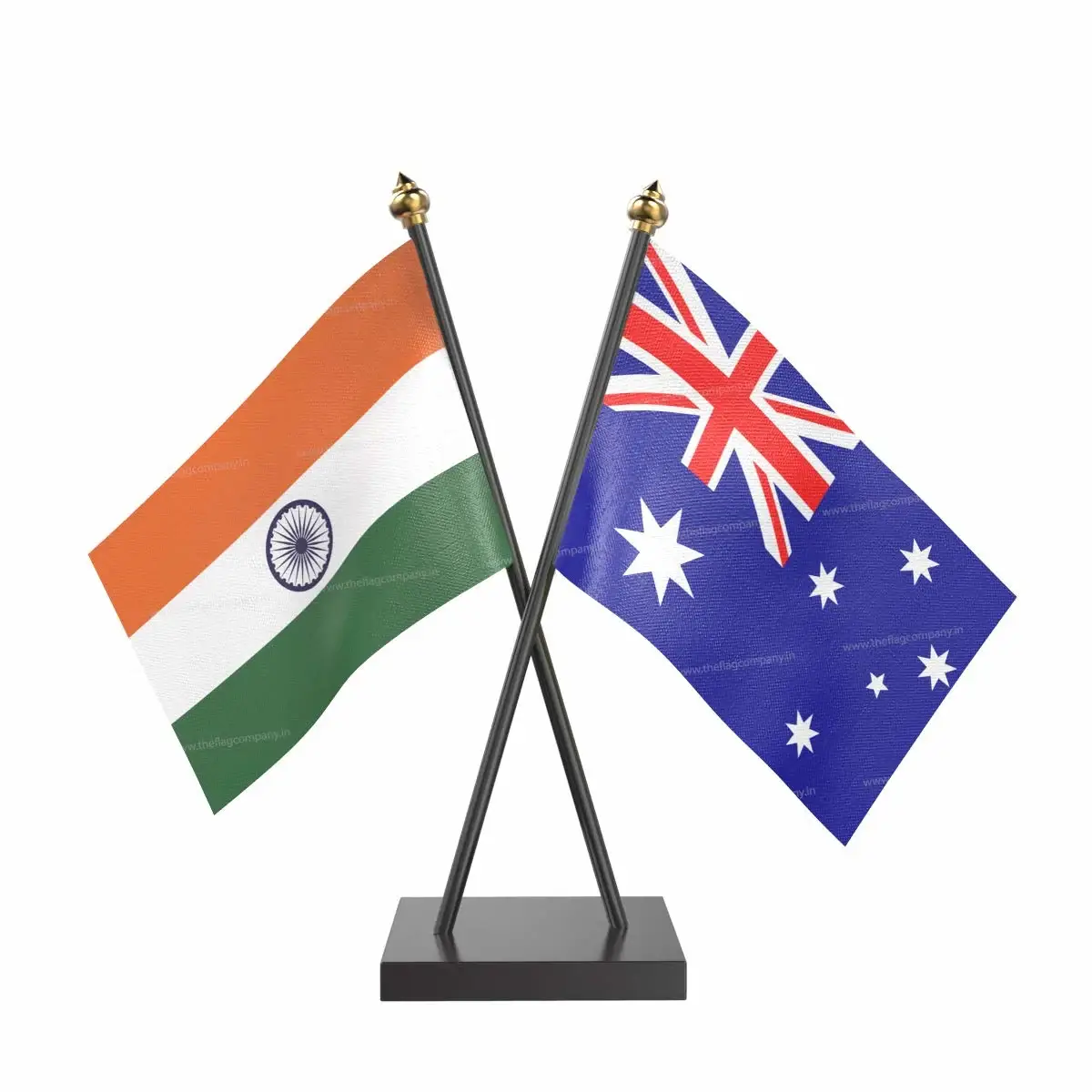
India-Australia strategic partnership:
Published: July 13, 2026
Last Updated: July 13, 2026
Category: International Affairs | Defence | Space
Reading Time: 5 minutes
📌 Key Takeaways
🇮🇳 India and Australia continue expanding defence cooperation through joint exercises and the Quad partnership.
🌏 The Cocos (Keeling) Islands hold strategic importance for maritime surveillance and Indo-Pacific security.
🚀 ISRO’s Gaganyaan mission could benefit from international support for tracking and communications.
⚛️ Australia supplies uranium for India’s civilian nuclear energy program under bilateral agreements.
🤝 The partnership is expanding into clean energy, critical minerals, education, artificial intelligence, and advanced technologies.
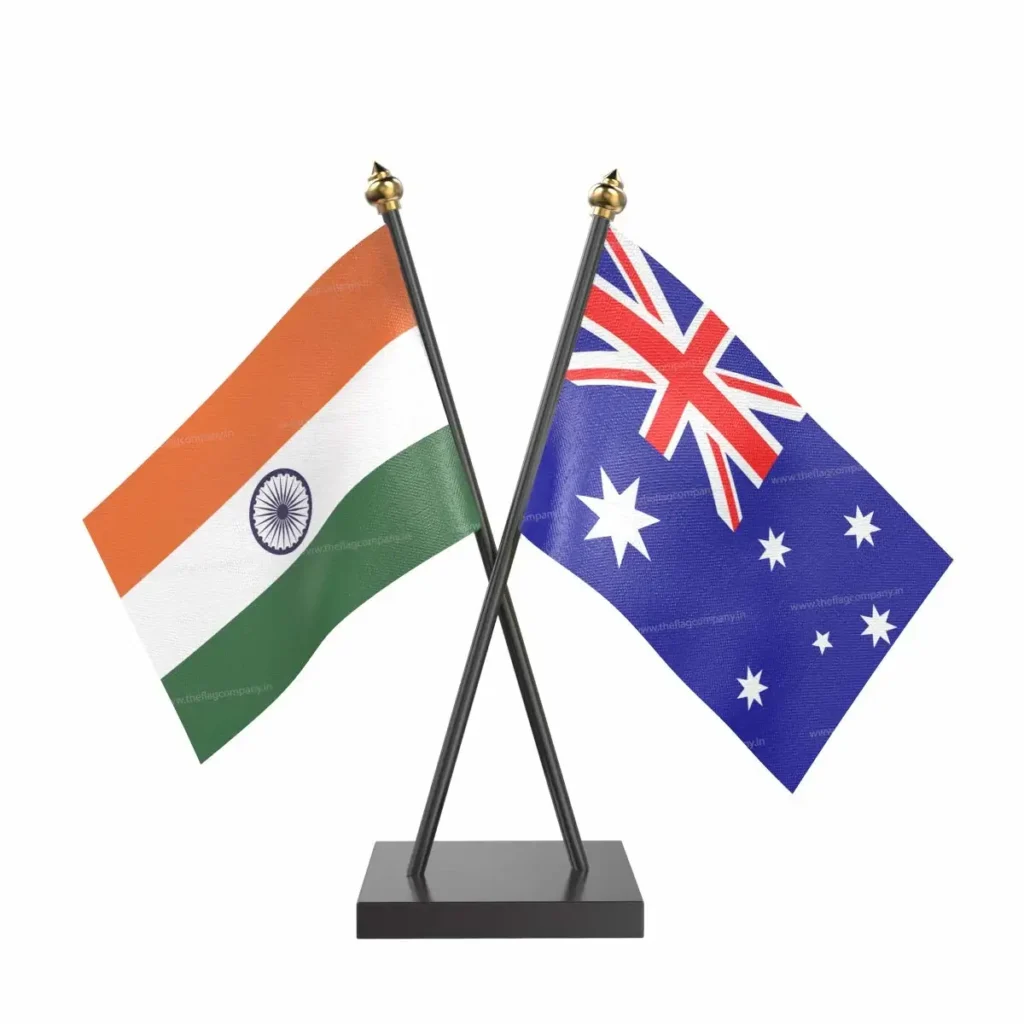
India and Australia continue to strengthen their strategic partnership through closer cooperation in defence, space technology, maritime security, and clean energy. As both countries seek to enhance stability in the Indo-Pacific region, recent discussions have highlighted growing collaboration on projects ranging from the Gaganyaan human spaceflight mission to civil nuclear cooperation.
The expanding relationship reflects shared interests in maintaining a secure, open, and rules-based Indo-Pacific while promoting technological innovation and economic growth. According to the Ministry of External Affairs, Government of India, bilateral ties with Australia remain a key focus area in India’s foreign policy.
India-Australia Expand Defence Cooperation
India and Australia have significantly deepened defence ties over the past several years through joint military exercises, intelligence sharing, and logistics cooperation.
Both countries participate in the Quad (Quadrilateral Security Dialogue) alongside the United States and Japan. The partnership focuses on regional security, maritime awareness, disaster response, cybersecurity, and freedom of navigation across the Indo-Pacific.
Military exercises such as AUSINDEX and Malabar have improved interoperability between the armed forces of the participating nations. These exercises help personnel from both countries understand each other’s operational procedures, making it easier to coordinate during joint missions.
Strategic Importance of the Cocos (Keeling) Islands
The Cocos (Keeling) Islands, an Australian external territory in the eastern Indian Ocean, occupy a strategically important location along major maritime routes.
The islands support several strategic activities, including:
- Maritime surveillance
- Search and rescue operations
- Monitoring major shipping lanes
- Aviation support
- Space tracking and communication infrastructure
Defence analysts have frequently discussed the islands’ growing strategic importance as Indo-Pacific security cooperation expands. Their location makes them valuable for monitoring maritime activity and supporting regional security operations.
While reports have suggested that India and Australia are exploring greater operational cooperation in the region, neither government has announced the establishment of an Indian military base on the islands.
💡 Did You Know?
- Australia is among the world’s largest uranium exporters.
- India and Australia are both members of the Quad grouping.
- The Cocos (Keeling) Islands lie approximately 2,100 km northwest of Perth.
- India and Australia signed the Economic Cooperation and Trade Agreement (ECTA) in 2022 to strengthen bilateral trade.
- The Ministry of External Affairs officially highlights India’s bilateral relationship with Australia as a key focus area.
Gaganyaan Mission Could Benefit from International Cooperation
India’s Gaganyaan Mission, led by the Indian Space Research Organisation (ISRO), aims to send Indian astronauts into space aboard an indigenously developed spacecraft.
Large-scale human spaceflight missions require extensive global tracking, communication, and recovery infrastructure. International cooperation often plays an important role in supporting such missions. Human spaceflight requires coordinated tracking and communication networks across multiple geographic locations to ensure crew safety.
Given the location of the Cocos (Keeling) Islands, experts have noted that facilities in the region could potentially assist future space tracking and communication operations. However, any such arrangements would depend on official agreements between the participating countries.
Civil Nuclear Cooperation Continues to Grow
In addition to defence cooperation, India and Australia maintain an important partnership in civil nuclear energy.
Australia is one of the world’s largest uranium producers and supplies uranium for India’s civilian nuclear energy program under international safeguards and bilateral agreements. This supports India’s nuclear power generation capacity while ensuring compliance with non-proliferation commitments.
The cooperation supports India’s long-term goal of expanding clean energy generation while helping diversify Australia’s energy exports.
Growing Economic and Strategic Partnership
Furthermore, beyond defence and energy, India and Australia continue to strengthen cooperation across multiple sectors, including:
- Trade and investment
- Education
- Critical minerals
- Renewable energy
- Digital technology
- Artificial intelligence
- Supply chain resilience
India has emerged as one of Australia’s fastest-growing strategic and economic partners, while Australia remains an important destination for Indian students, professionals, and businesses.
Strong People-to-People Connections
The Indian community represents one of Australia’s fastest-growing migrant populations and contributes significantly to education, healthcare, information technology, entrepreneurship, and research.
High-level visits by leaders from both countries have consistently received enthusiastic support from the Indian diaspora, reflecting strong cultural and economic ties between the two nations.
Why the Partnership Matters
Meanwhile, as geopolitical competition increases across the Indo-Pacific, closer cooperation between India and Australia is expected to play an important role in promoting regional stability.
Their partnership extends beyond defence to include:
- Maritime security
- Space technology
- Clean energy
- Critical infrastructure
- Advanced manufacturing
- Innovation
- Economic resilience
Analysts believe that continued collaboration will help both nations address emerging regional challenges while creating new opportunities for trade and technological development.
Conclusion
India and Australia’s relationship has evolved into a comprehensive strategic partnership built on shared democratic values, economic cooperation, and common security interests. While discussions around defence logistics, space cooperation, and regional infrastructure continue to develop, official agreements remain the basis for any future initiatives.
As both nations deepen collaboration across defence, energy, technology, and education, the partnership is expected to remain an important pillar of stability and growth in the Indo-Pacific region.
Frequently Asked Questions
Q1: Why are the Cocos (Keeling) Islands strategically important?
Their location in the eastern Indian Ocean makes them valuable for maritime surveillance, search and rescue operations, and communication infrastructure supporting Indo-Pacific security.
Q2: What is the Quad?
The Quad is a strategic partnership comprising India, Australia, Japan, and the United States. It focuses on regional security, disaster response, cybersecurity, maritime cooperation, and a free and open Indo-Pacific.
Q3: Does Australia supply uranium to India?
Yes. Australia exports uranium to India’s civilian nuclear energy programme under bilateral agreements and international safeguards.
Q4: What is the Gaganyaan mission?
Gaganyaan is ISRO’s first human spaceflight programme aimed at sending Indian astronauts into space aboard an indigenously developed spacecraft.
Sources
- Ministry of External Affairs, Government of India
- Australian Department of Defence
- Indian Space Research Organisation (ISRO)
- Reuters
- Government of Australia
By NewsDashboard Team
📝 Editor’s Note
This article has been fact-checked using reliable public sources and edited to maintain journalistic accuracy, clarity, and neutrality. Where information is developing or not independently verified, it has been clearly identified within the article.
⚠️ Disclaimer
This article is published for informational and educational purposes only. It is prepared using publicly available information from official government agencies, reputable news organisations, and other reliable sources available at the time of publication. While the NewsDashboard Team strives for accuracy and timely updates, information may change as new developments emerge. Readers are encouraged to verify critical information through official sources before making decisions based on this content.
About NewsDashboard
NewsDashboard.in is an independent digital publication delivering trusted news, explainers, and insights in English and Telugu. Our editorial team focuses on factual reporting, balanced analysis, and responsible journalism across technology, business, science, current affairs, and global developments.